

खरंच गरज आहे का?
Do you really need it? The question my aaji in Pune would have asked before any purchase.

I was born and brought up in Pune, and I have been finding out ever since that you can take the girl out of Pune, but you cannot take the Pune out of the girl. It shows up in how I run things at Moneyplus, in what I tell clients, and in the way I raise one eyebrow when someone says, “this ₹40,000 sale is too good to miss.”
This Saturday, instead of markets and mutual funds, I want to tell you where my ideas about money actually come from. It was not a textbook.
This week the Big Billion Days and the Great Indian Festival are on, and every phone is showing a countdown. So it is a good week for this story.
The 5 am club (long before it was a trend)
Today people pay for apps and workshops that teach them to wake up early. In my childhood, we simply had Ganeshotsav.
Before the city had even found its slippers, people were already at Dagdusheth and the other pandals, sitting in neat rows, reciting the Atharvashirsha together. Hundreds of voices, one rhythm, no microphones. Nobody was performing. Nobody was counting likes. The alarm clock was the only one sulking.

I did not realise it then, but that was my first lesson in money discipline. Those people did not show up at dawn once. They showed up every year, every morning, quietly. Wealth is built the same way. A SIP every month. Saving before you spend. It is not glamorous. It simply works.
A Peth girl in an English-medium school
As a child, I lived a double life, in two languages.
At home in the Peth area, Marathi was not just spoken, it was performed, with vocabulary, idioms, sarcasm and the occasional dramatic pause. Then every morning I went to an English-medium school, where I said “May I go to the washroom, ma’am?” and ate my tiffin under the watchful eyes of the teachers.
By evening I was back home, where my aaji would ask “अगं, जेवलीस का?” (Have you eaten?) in a tone that made it clear “I’m not hungry” was not an acceptable answer.
I was diversified in languages long before I was diversified in portfolios. Marathi taught me that words carry weight. English taught me to be crisp. A chartered accountant needs both.
The proverbs that were our teachers
Long before anyone handed me a balance sheet, I had already heard the whole syllabus at home, in everyday sayings.
“अंथरूण पाहून पाय पसरा.” Stretch your legs only as far as your bedsheet allows. That is budgeting in a single line, no spreadsheet required.
“थेंबे थेंबे तळे साचे.” Drop by drop, a lake is formed. That is compounding, delivered without a calculator.
Nobody gave us a lecture. We watched the elders live this way, and it sank in, usually with a little sarcasm for those who did not follow it.
The legendary afternoon shutdown
No Puneri childhood is complete without the famous afternoon closing of shops. Between one and four, the city politely took a nap. You could be in desperate need of a notebook, a pen or a pack of biscuits. It did not matter. The shopkeeper was resting, and the shop was resting with him.

Looking back, it was brilliant financial design. No shop open means no impulse purchase. The whole city had a built-in cooling-off period. There are people who study this for a living. Pune simply put the shutters down and went to sleep.
Learning to bargain at Tulshibaug
If you want to learn negotiation, forget the management courses. Go to Tulshibaug or Laxmi Road with a Marathi mother or aaji.
Watching her inspect a single steel utensil was like watching a seasoned auditor go through a ledger. Nothing escaped her. She would ask the price, look horrified, put the item down, begin to walk away, and only then, when the shopkeeper called her back, would the real conversation begin.
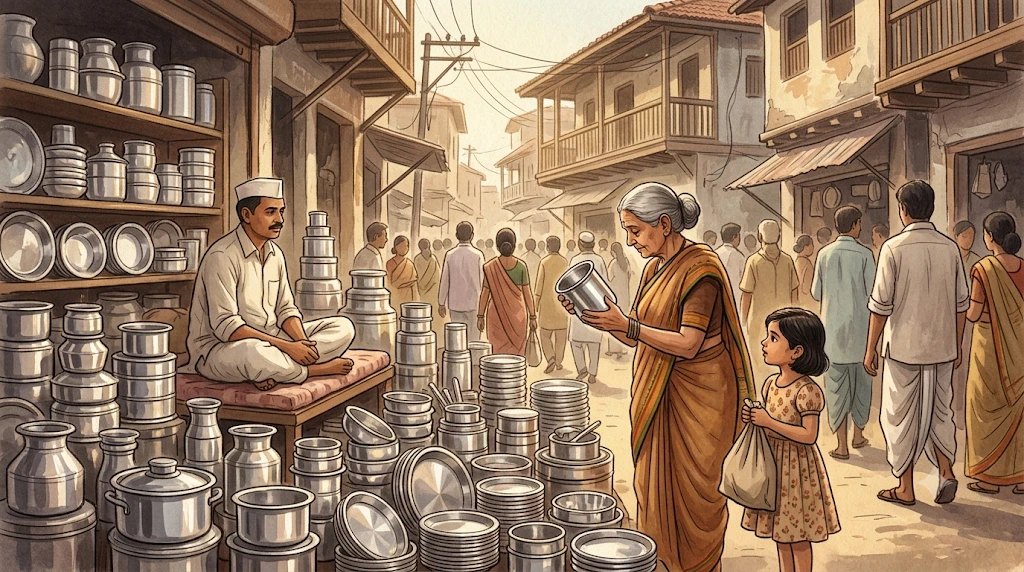
I learned three things there. Always compare. Never fall in love with something before you have paid for it. And the most powerful word in any negotiation is a polite “no, thank you.” I share these same three lessons with clients today. But I still cannot walk away from a shop the way she did.
The wedding that started on time (yes, really)
Maharashtrian weddings were simple. The rituals were rich and the hospitality was warm, but there was no show. No ice sculptures, no theme that needed an explanatory note.
And the muhurat? It began at the exact minute the priest announced. Not “around 12”. At 12:32. It is perhaps the only event in India that starts on time, and I will defend that claim to anyone.
Then there was the gift envelope with its famous odd amounts: ₹101, ₹251, ₹501. That extra rupee is a lovely tradition, but let me say it for the accountants in the room: it is the only time I have seen rounding off go in the opposite direction, and I have never complained.
I tell clients this all the time. A celebration does not need to be a financial burden to be meaningful. The joy comes from the occasion, not from the invoice.
Lessons from the pangat
Then there was the meal. We sat in rows, we waited until everyone was served, and we began only after the prayer of thanks. The servers came by with “अजून थोडं?” (A little more?) and you had to decide, right there, how much was enough. Take only what you can finish. Waste nothing. अन्न हे पूर्णब्रह्म, food is God, and you do not insult it by leaving it on the plate.
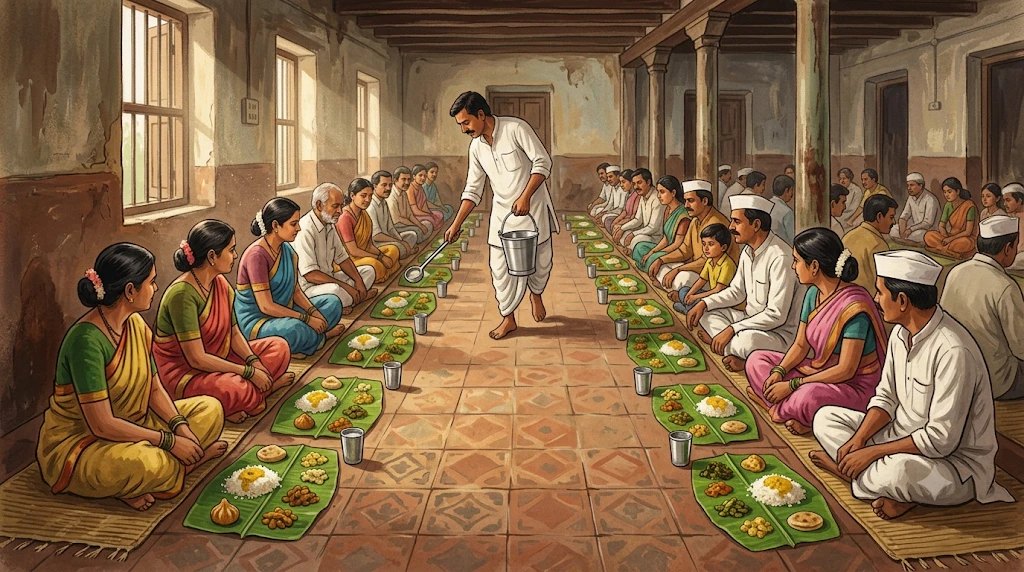
I believe this is where money habits quietly begin. A person who learns not to waste a grain of rice learns, without realising it, not to waste a rupee. A person who takes only what they need learns the difference between a need and a want.
What this means for your money
Today, from our offices in Nashik and Jalgaon, I carry these habits into every conversation at Moneyplus. What Pune gave me, in a short list:
Show up regularly. Small, regular investing beats the occasional grand gesture.
Build in a cooling-off period. Take the Pune afternoon shutdown to heart. Sleep on every big purchase.
Compare, and walk away when needed. The best deals come to those who are not desperate.
Celebrate without excess. The best moments in life rarely depend on how much was spent.
Take only what you need. Waste nothing, not a grain of rice, not a rupee.
A closing thought
I am a woman, a professional and an entrepreneur, but before all of that I am a daughter of Pune and of Marathi culture. It taught me to be disciplined without being rigid, and to be confident without being loud.
So this week, when a discount tempts you, pause. If you really need it, buy it with a clear conscience. If not, you have just earned a little more freedom. Either way, first ask what my aaji would have asked.
(Do you really need it?)
Want to talk it through?
If you are planning a big purchase or a new investment, talk to the Moneyplus team first.
Anuya
The illustrations in this post are AI-generated.
Moneyplus is an AMFI-registered mutual fund distributor — ARN-137949. What you read here is general information written from experience, not a recommendation to buy or sell any scheme, and it does not take your personal situation into account. As a distributor, Moneyplus earns commission on the schemes it transacts for its clients. Mutual fund investments are subject to market risks; read all scheme related documents carefully. Past performance does not guarantee future returns.



दसरा दिवाळीच्या या सणासुदीच्या पूर्वी अतिशय योग्य वेळ निवडून सेल आहे म्हणून आवश्यकता नसताना देखील खरेदी करणाऱ्यांसाठी अतिशय उपयुक्त अशी पोस्ट केलेली आहे त्याबद्दल मनःपूर्वक आभार व धन्यवाद !
Wow, what a narration!!!
It’s a blog, speaks about saving the money, taking you to those nostalgic moments &
Thanks for such a wonderful thought…