
How Much Money Is Enough To Make You Happy?
The answer no one tells you
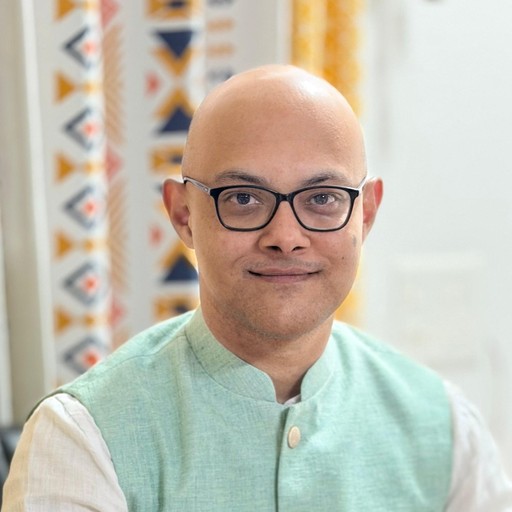
Before you read — a note from Hitesh Kakkad, Founder, Moneyplus
Today’s piece is not mine. It is a guest essay by my friend Dr Amit Hartalkar. Let me tell you why I wanted you to read it.
In twenty years of sitting across from families, I have been asked almost every question about money. Which fund. How much return. When to sell, when to buy.
Only one question almost nobody asks — kitna kaafi hai? How much is enough?
We spend a lifetime chasing a number we have never once sat down and named. We reach it, and quietly move it a little further. More becomes the goal — and “more” has no address.
My friend Amit is a doctor. At the bedside, he has seen exactly what money decides in the moments that matter most. When he wrote this, I stopped — because he answers that one unasked question better than any chart I could put in front of you.
Read it slowly. Then, quietly, name your number. Here is Amit, in his own words.
— Hitesh
Guest Essay · by Dr Amit Hartalkar
I was speaking to two sons of an eighty-year-old patient who had come to me in distress.
The sons looked at each other. After fifteen years of medical practice in rural India, I know that look. I assured them that despite the ICU and the need for life support, I would do my best to keep expenses low. They did not seem to be in a good place financially.
Fifteen minutes later, the sons came back and asked for a discharge. They had decided to nurse their father at home.
“We will sign all the papers. We don’t want his troubles to increase.”
Whether to continue medical care or withdraw it. That was the choice my patient’s sons had to make. And the choice depended on how much money they could spend. They decided to withdraw care because they could not spend. They had to make a choice they would not have made otherwise.
I have thought about those sons many times since. Money decided whether their father would stay in a hospital bed or in his own. The choice was never really theirs.
When my father was in medical school, he survived on a government scholarship. It was meagre, but it was his only source of income. Doing a job alongside medical school is nearly impossible. The schedule is gruelling.
He says he sometimes managed with just one or two pieces of bread as his meal.
There was no money. So there was no choice to have healthy food. At that stage, the question is not what kind of life you want. It is whether you eat tonight.
My father completed medical school, got a job, and built his practice. His earnings improved. He never had to compromise on food again. More money guaranteed survival, and so more money brought more happiness.
He worked hard and honestly. He earned recognition. We moved into a bigger house. There was space for us to play. Then came a two-wheeler, a car, a television, and over the years, better versions of these things kept arriving. Every new purchase was welcomed with cheers.
My father had brought our family out of survival and into a life beyond bare essentials. More money gave him the choice to buy comfort and entertainment. At this stage too, more money meant more happiness.
He did well. It ensured we got a good lifestyle and a good education. I got into medical school. I completed my training and joined him. His practice was established, his reputation impeccable.
I worked hard. Too hard, most of the time. I worked honestly and sincerely.
Soon we had two big houses and three cars. I could buy whatever I had dreamt of as a child. And I bought. Clothes, electronics, accessories. Whatever I decided. Money had given me the ability to buy anything I wanted.
In the beginning, I enjoyed this a lot. But slowly the happiness ebbed. My overflowing cupboards and wardrobes made me sad. I would open them and feel heavier.
I had way more than I needed. And I was still hungry.
More choice was not making me happier anymore. I was yearning for peace from my gruelling routine. I was yearning for good time with family and friends. I was yearning for art, creativity, literature. I wanted to slow down.
But more money and a better reputation had taken that choice away from me.
This is the part nobody tells you. After a certain point, more money does not buy you freedom. It buys you obligations.
Two kinds of people
My father’s story and my own taught me the same lesson in two different phases. When survival is uncertain, money is not optional. Every rupee that secures your next meal, your shelter, your child’s education brings genuine happiness. You have no choice but to earn, and the earning itself feels like liberation.
Once survival and a decent lifestyle are secured, the equation shifts.
Here the road splits.
Some people genuinely want the penthouse and the German sedan. Luxury has real meaning for them, and purchasing it brings real joy. For these people, money can keep delivering happiness. The things they value carry exchange value: a price tag that matches their desire, and acquiring that thing is the satisfaction itself.
I am not one of those people.
What I wanted was a lazy evening at a roadside stall with friends, having tea and laughing about nothing. I wanted to sit with a book for three uninterrupted hours. I wanted to notice the sunset again. These things have almost no exchange value, but they carry immense experiential value. And the pursuit of more money had quietly stolen my ability to choose them.
For people like me, after a certain point, more money does not bring more happiness. It brings more distance from the life we actually want.
I have asked many finance experts a simple question: “How much money do I need?”
None of them gave me a number.
Now I know why. There is no magic number. The answer depends entirely on what kind of person you are.
What the answer actually depends on
If you derive satisfaction from things with exchange value; luxury, status symbols, assets that others can measure, money will keep working for you. Earn more, spend more, feel more. The machine runs.
But if you value experience over luxury, the answer is different. For you, more money will eventually feel like a trap. The time and effort you spend earning it will directly compete with the experiences you actually want to have. You will find yourself standing in front of an open wardrobe, surrounded by things you no longer care about, wondering where your life went.
I stood there.
And I chose differently. I systematised my work. I reclaimed my evenings. I started reading. I started writing. I made space for the small things that had always mattered more than the big ones.
My practice did not shrink. My income did not collapse. The only thing that changed was that I started living a life I recognised as my own.
The number nobody gives you
Everyone has to earn enough to guarantee survival and a decent lifestyle. That part is non-negotiable, and achieving it brings real happiness. No question there.
Beyond that, how much you need depends on what you are actually chasing.
If luxury still excites you, keep going. Money will keep delivering.
But if you find yourself like me, successful, stable, and strangely empty, the answer may not be more money. It may be less. Less work. Fewer obligations. More time for the roadside ice cream, the book, the sunset.
The sons who took their father home that day were not confused. They knew what the right medical decision was. They just did not have the money to make it. So they made the only choice they had and called it love.
I have been through this. I came out knowing that the number is not a number at all. It is a question about who you are and what you value.
And once you can answer that honestly, the rest becomes surprisingly simple.
Dr Amit Hartalkar
This essay was first published by Dr Amit Hartalkar on The Wise MD and is republished here with the author’s kind permission. The views expressed are the author’s own. — Moneyplus · ARN-137949